
Maxi Cris
Designer

Startup • Marketplace • App Mobile
Diseñando para 2 millones de usuarios: El rediseño estratégico
Rediseñando y elevando la interacción gastronómica de un producto de alto impacto. Una apuesta por una interfaz intuitiva, fluida y sin fricciones, construida estratégicamente para escalar y soportar a más de 2 millones de usuarios registrados
My Role
Solo Product Designer. Owned the end-to-end product design process, from discovery to delivery.
Team
Founders (CEO & CTO)3 Developers (Front & Back)1 Growth Analyst
+16%
GMV
+42%
CTR
+18%
30-Day Retention
Context
Redefining the dining out experience
Morfy is a marketplace that connects people with the best dining options in their city. It centralizes the entire dining out experience in one single place, providing quick and easy access to exclusive discounts.
Challenge
From a market-validated app to a ecosystem
My main challenge was leading the end-to-end product design to take the Morfy experience to the next level. The goal: evolve a market-validated app into a robust ecosystem.
Working closely with cross-functional teams, we iterated and launched new features to drive key business metrics while ensuring a seamless and exceptional user experience.
Opportunity
Hitting the design ceiling
While early versions successfully validated the market, rapid user growth pushed the app to its design limits. We needed to build a solid, scalable foundation to drive business metrics without sacrificing usability.
The Approach
Data-driven decisions over assumptions
To avoid guesswork, I triangulated insights from three core areas:
- Qualitative Research: User interviews revealed a confusing and fragmented navigation as new content grew.
- Quantitative Data: Funnel analytics showed critical drop-offs in core user flows.
- Business Vision: The existing architecture couldn't support the new revenue targets.
Strategy
Building a Cohesive Ecosystem
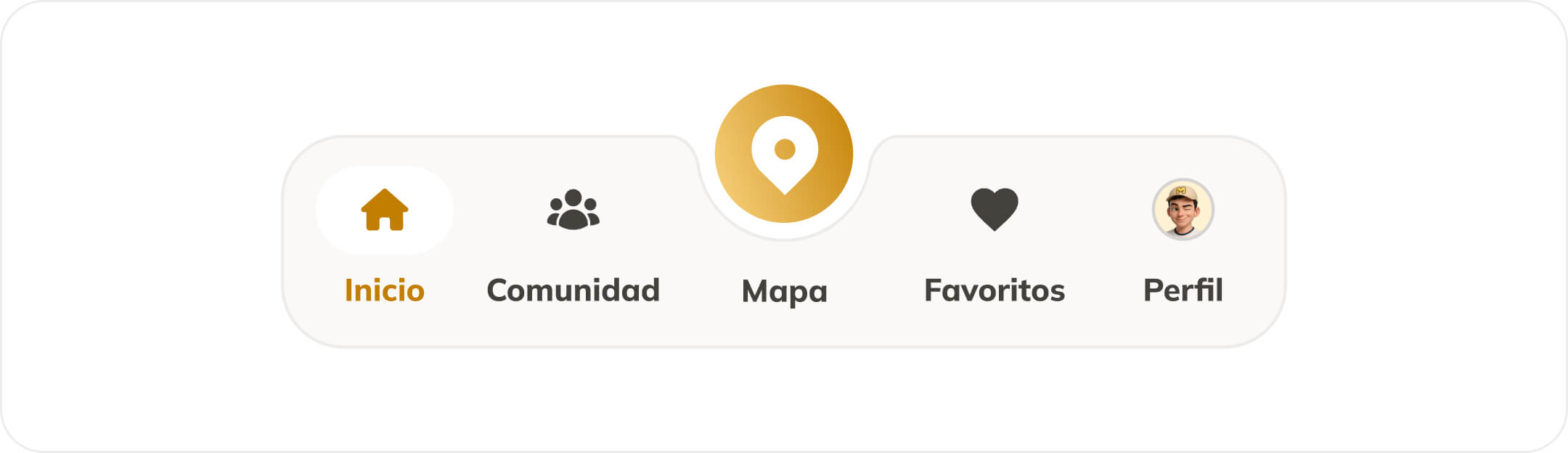
Armed with these insights, I shifted the team's mindset from designing isolated screens to building a cohesive digital ecosystem. I led a comprehensive redesign strategy anchored in the three core pillars of the app's UX:
Discovery
Exploring and finding the right dining options.
Conversion
Making decisions and seamlessly redeeming benefits.
Engagement
Driving retention and continuous daily use.
Porque esto importa
Diseñando para el crecimiento real
This redesign wasn't just a visual facelift; it was about unlocking Morfy's next growth stage. A fragmented app translates directly to lost revenue. Our goal was to evolve Morfy from a simple 'discount directory' into a powerful transactional ecosystem.
To achieve this, we set three core product objectives:
- Operational Scalability: Building a flexible Design System to iterate and ship features faster.
- Conversion Optimization: Removing friction across the entire funnel—from initial discovery to checkout.
- Maximizing LTV: Turning one-time deal hunters into loyal, recurring users through strong retention mechanics.
Pilar 1: Discovery
Streamlining discovery
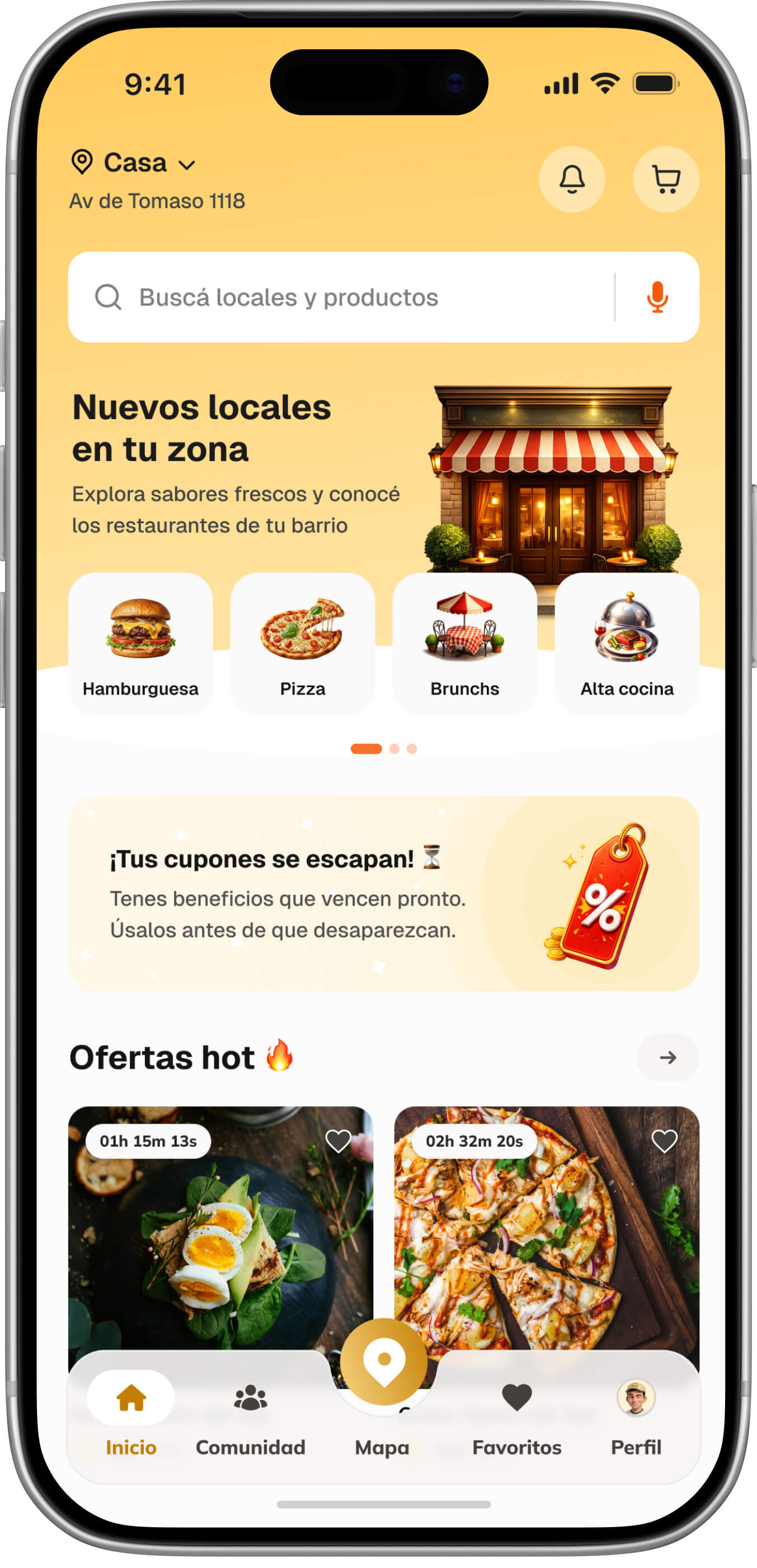
Decision Fatigue. As our restaurant base grew, the original Home screen and Map became overwhelming. Users were spending too much time scrolling without tapping, suffering from cognitive overload due to a lack of clear hierarchy and poor filtering options.
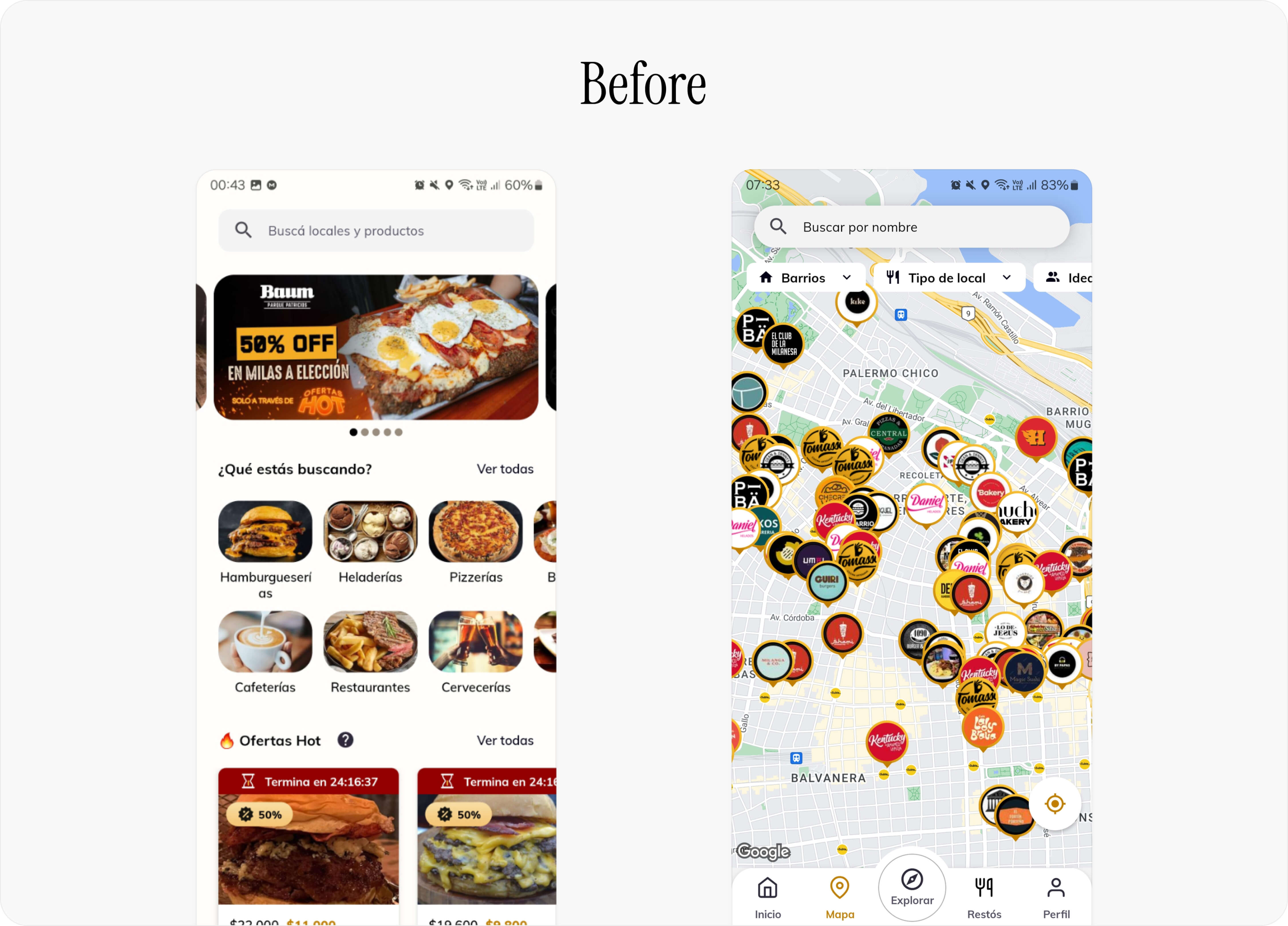
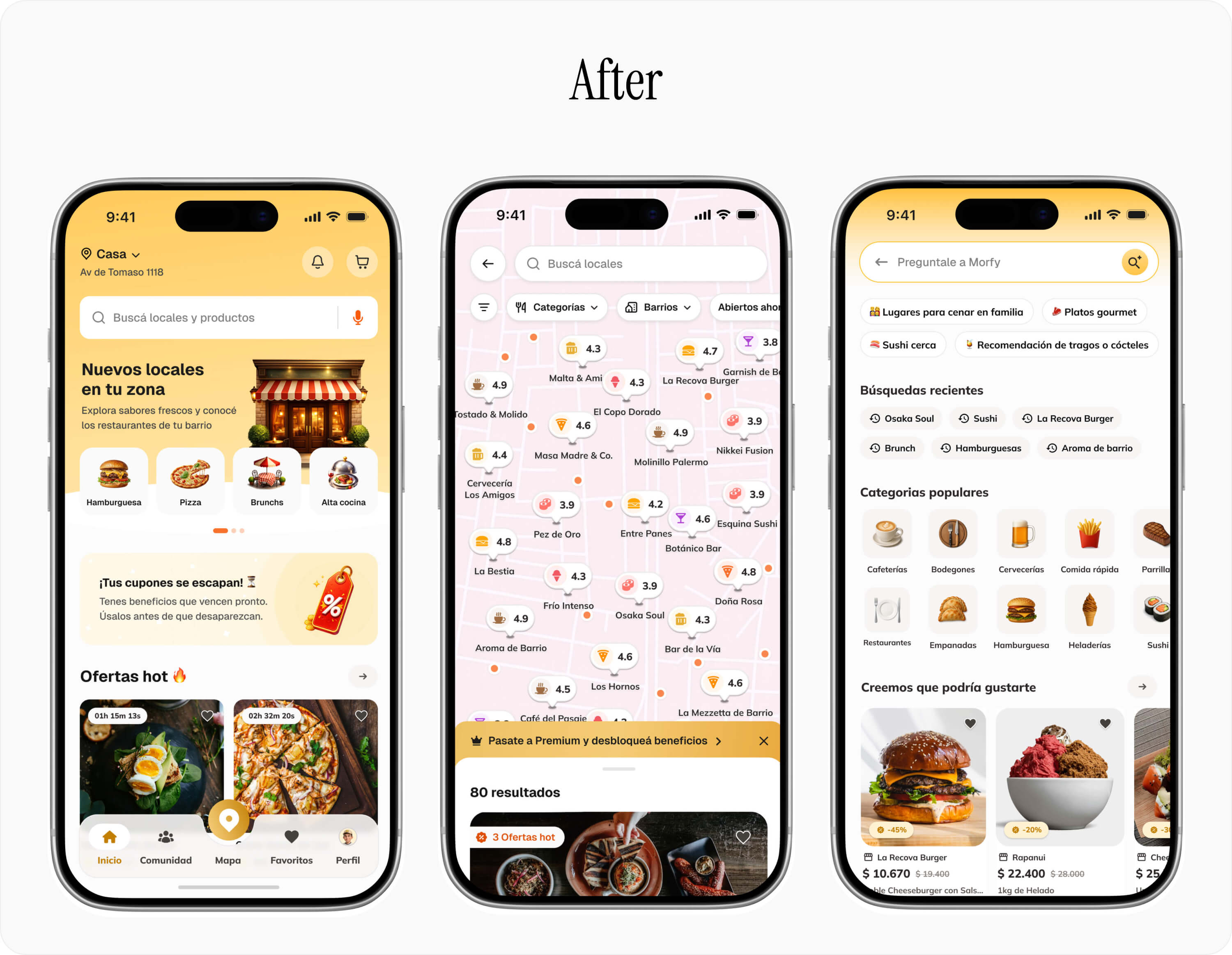
Discovery: Key design decisions
- Dynamic Hierarchy Home: I reorganized the content with a strong visual hierarchy, introducing contextual sections to aid quick decision-making.
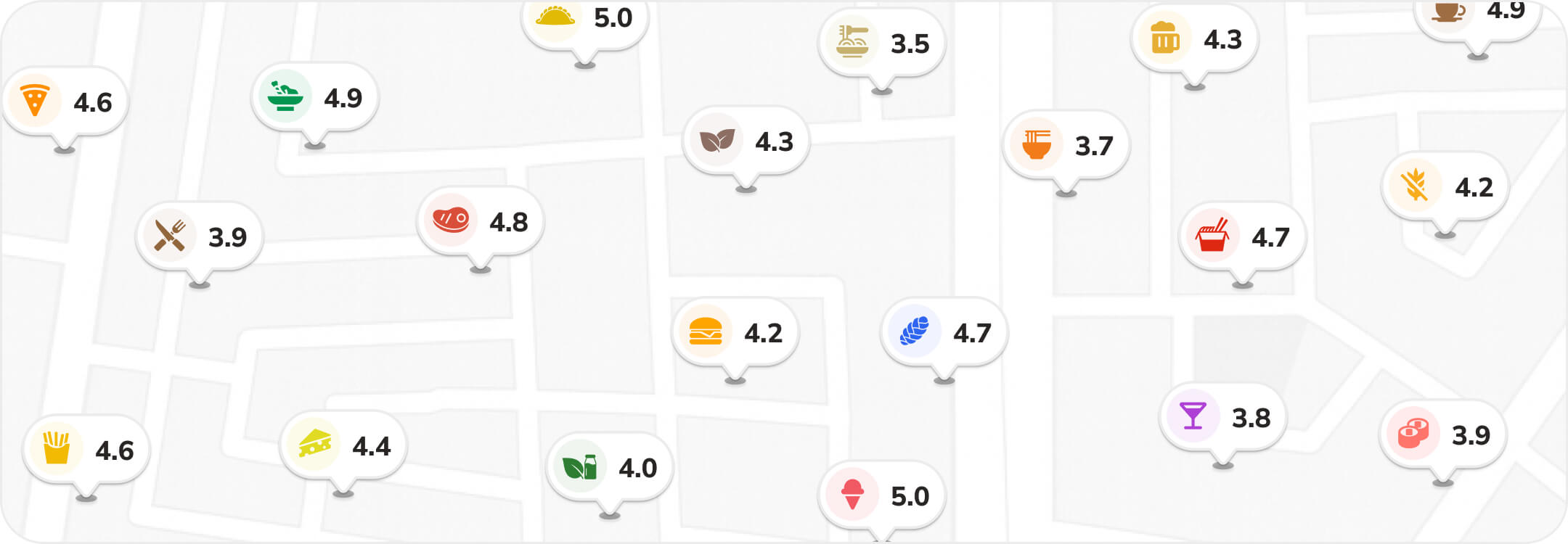
- Decluttered Map: Replaced overlapping logos with a cleaner interface and bottom-sheet preview cards, enabling users to explore seamlessly without losing their map context.
- Proactive Search: Designed a guided interface using visual categories, trends, and history to help users before they type, lowering the barrier to discovery.
Impact
The redesigned discovery flow led to a +42% increase in click-through rates (CTR) to restaurant profiles and reduced the average time spent searching by 36%.
Constraint & Trade-off
Due to legacy API limitations, we traded real-time personalization and macro-level brand visibility for a highly usable, clustered map and overall system stability.
Pillar 2
Optimizing the Path to Purchase
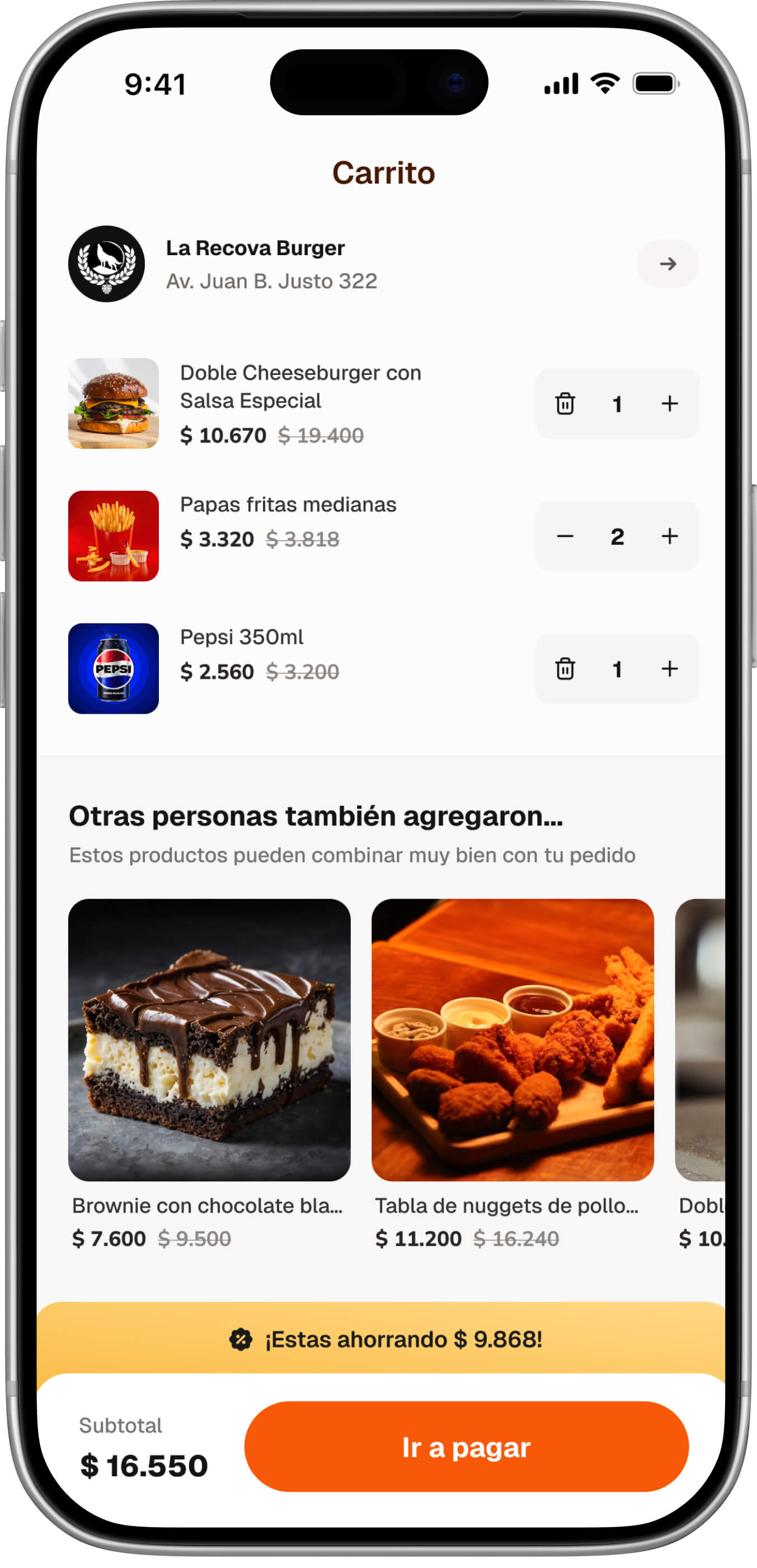
The challenge: Transactional Friction. While adding items was easy, a disjointed legacy payment flow caused cognitive overload and high abandonment rates. To fix this, I designed a Transparent Checkout Flow centered on confidence and error prevention. By proactively structuring pickup details and a clear receipt, we ensured users felt secure and fully informed about exactly where, when, and what they are paying for.
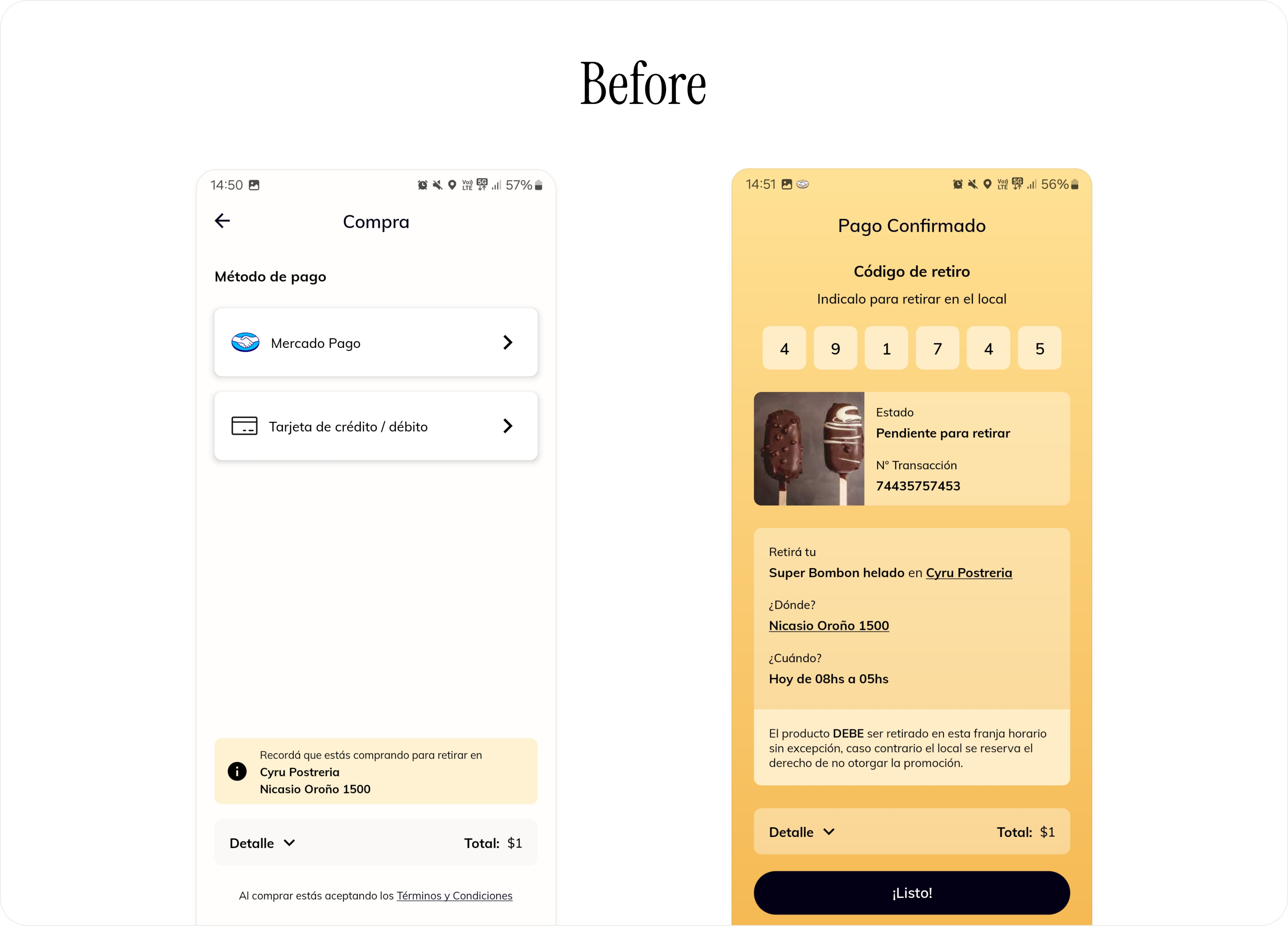
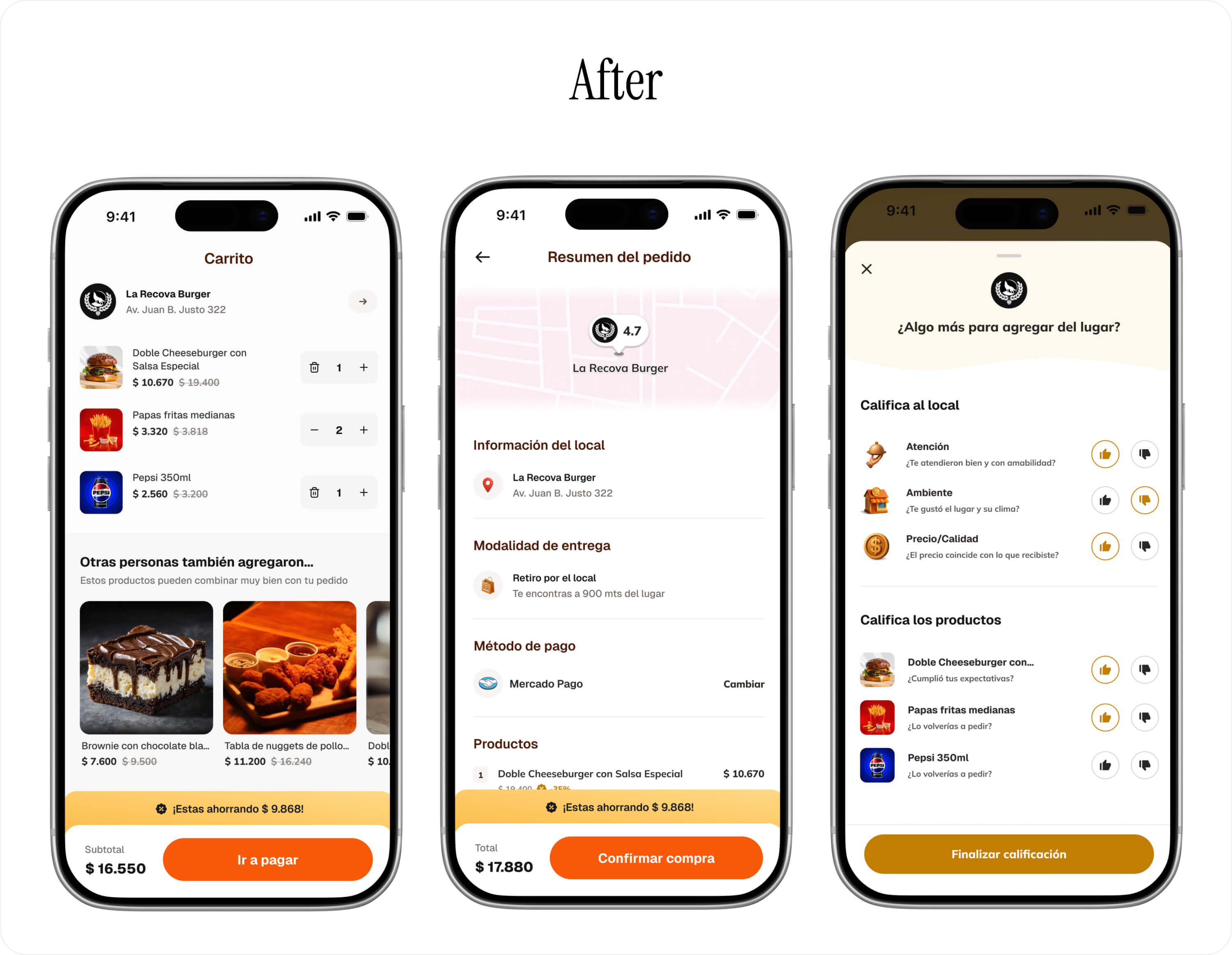
Conversion: Key Design Decisions
- Seamless Cart Experience: Surfaced total savings upfront to reinforce the app's core value proposition. I also integrated a bottom recommendation so users can easily add complementary items, reducing the cognitive load of navigating back to the menu.
- Transparent Checkout Flow: Centered on confidence and error prevention. By proactively displaying logistics and a clear receipt, users felt secure and fully informed about where, when, and what they were buying.
- Frictionless Order Detail: Redesigned a cluttered interface into a clean, scannable layout. By isolating pickup instructions from financial details and the support button, we created a highly digestible experience.
Impact
The optimized end-to-end checkout flow resulted in a -24% reduction in cart abandonment and drove a +16% increase in overall successful transactions (GMV).
Constraint & Trade-off
To prevent checkout delays, I traded hyper-personalization for speed. I implemented a rule-based UI (top 3 add-ons) that ensures instant loading while capturing cross-sell opportunities without compromising performance.
Pillar 3
Building Long-Term Retention & Loyalty
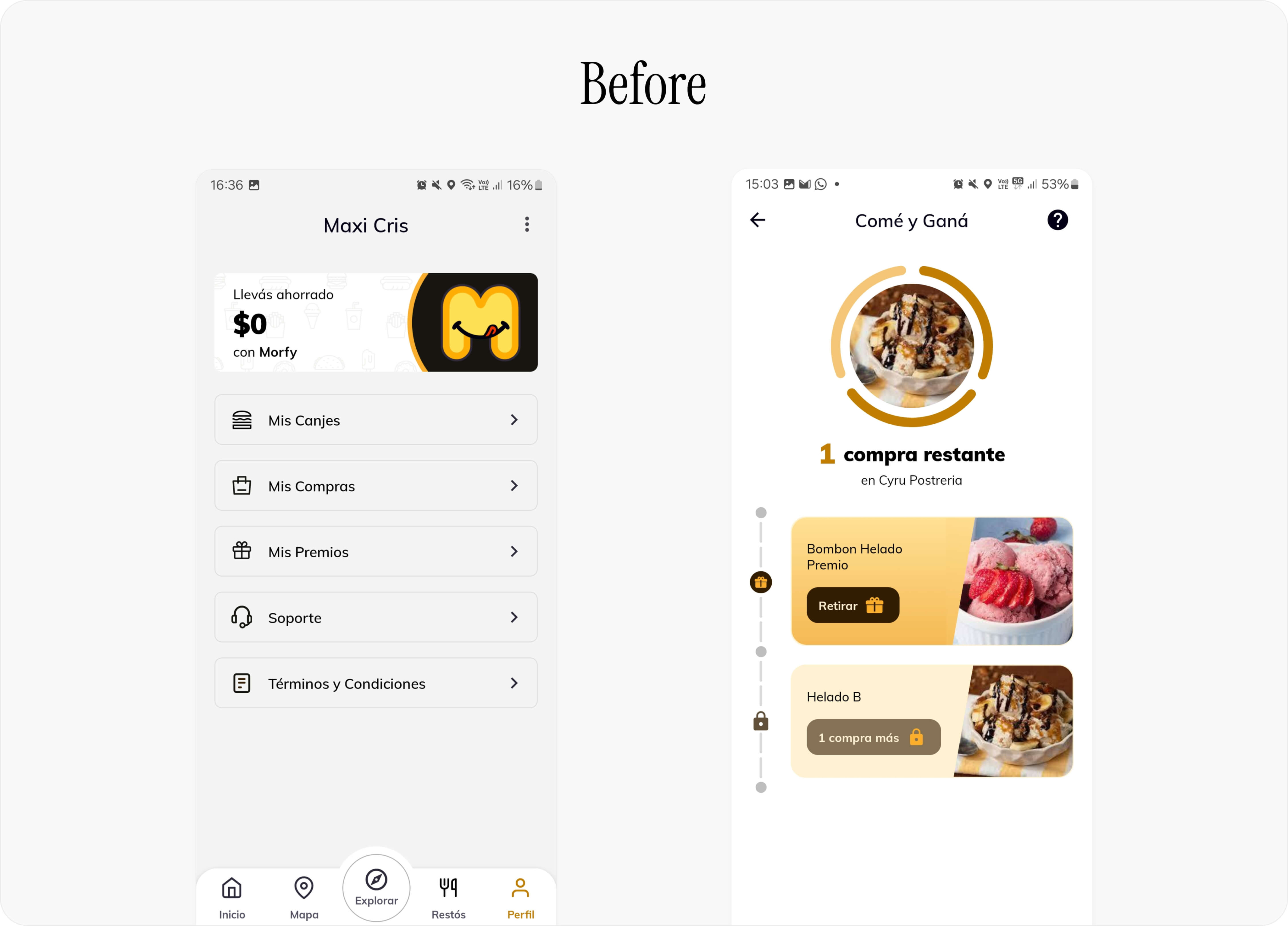
The Challenge: Closing the 'Single-Player' Gap: Morfy felt like a lonely experience, lacking social validation and community trust. Profiles were sterile, and loyalty felt like a chore. I needed to build a social layer that transformed 'loyal customers' into trusted community members, incentivizing high-quality reviews through shared achievements.
Engagement & Social Proof: key design decisions
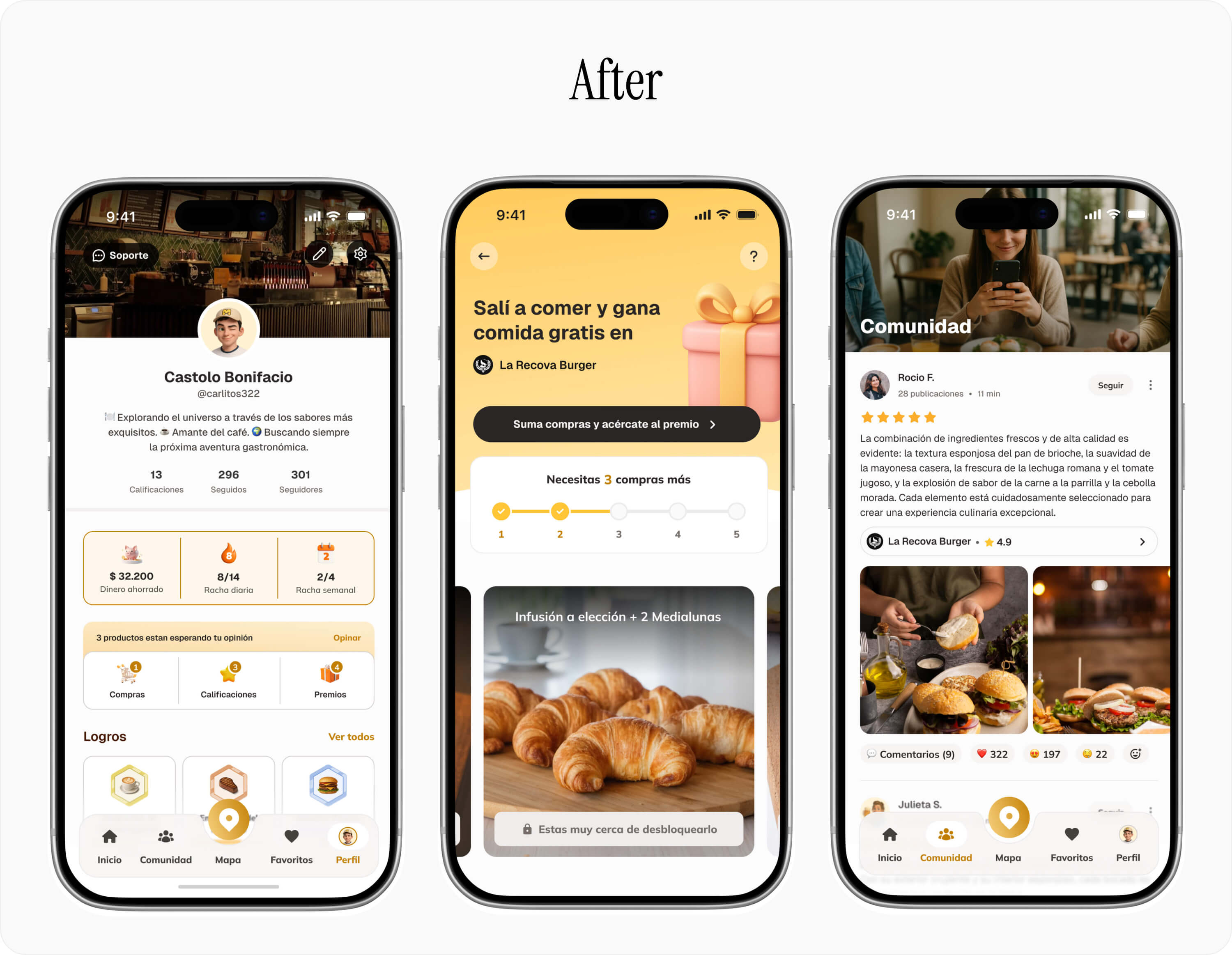
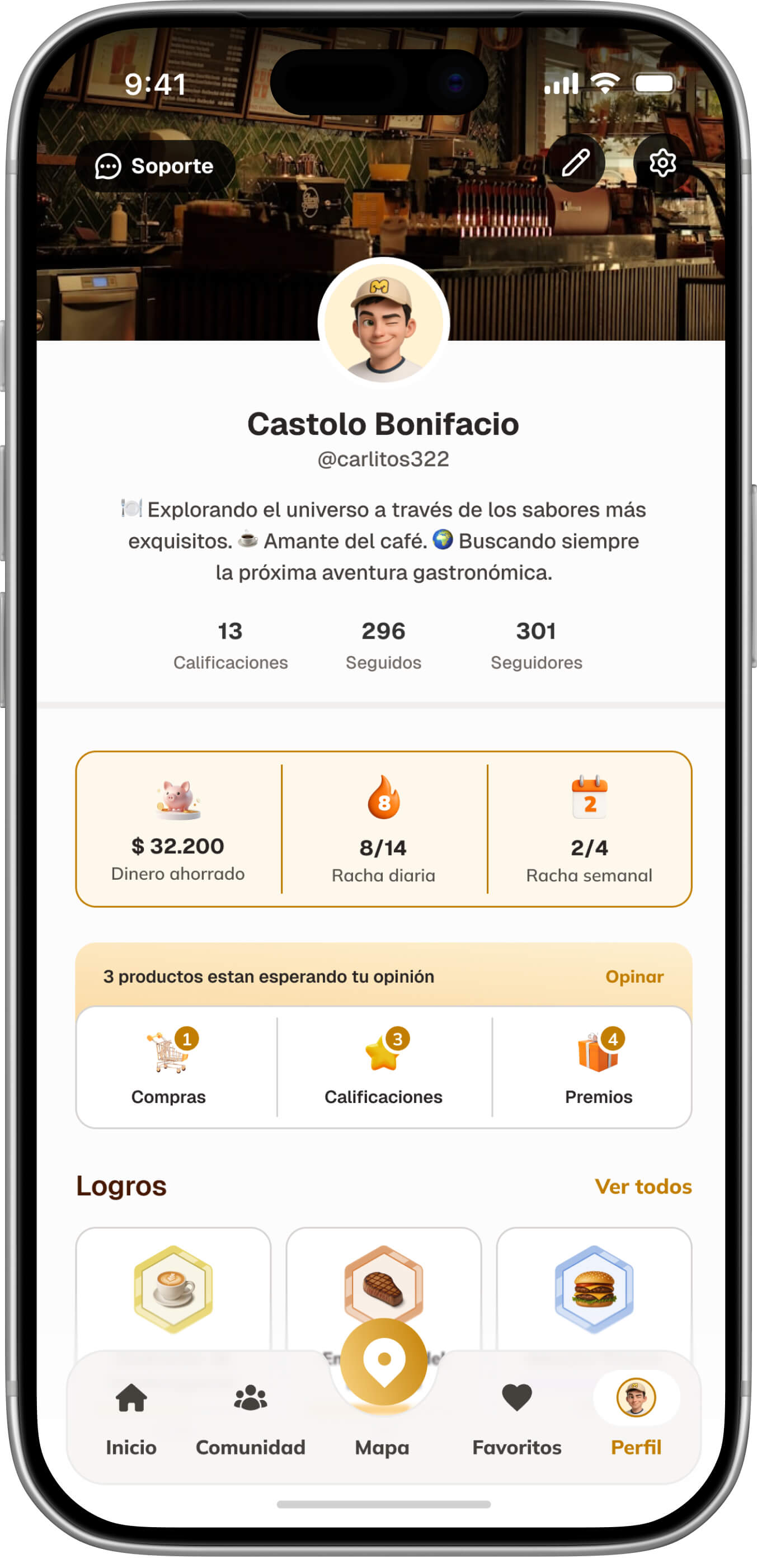
- Gamified User Profile: Transformed the user profile from a sterile list of settings into a dynamic social identity. I redesigned this space to celebrate the user's journey as a 'foodie'. This shift turns a transactional account into a personal space they want to grow.
- Loyalty Tracker: Transformed purchase counters into a visual progress bar that highlights the path to unlocking rewards. This makes goals feel achievable and directly incentivizes merchant loyalty.
- Community-Driven Trust: Integrated a seamless review flow and User-Generated Content (UGC) to build trust. Gamified profiles motivate users to share experiences, effectively lowering the friction for others to try new, unrated restaurants.
Impact
The optimized end-to-end checkout flow resulted in a -24% reduction in cart abandonment and drove a +16% increase in overall successful transactions (GMV).
Constraint & Trade-off
Since a complex ML recommendation engine would cause unacceptable checkout delays, we traded hyper-personalization for speed. I designed a simpler, rule-based UI (top 3 add-ons) to ensure instant load times, capturing cross-sell opportunities without compromising app performance.
Biggest Learning
Design is a business tool, not just aesthetics.
Working as a Solo Designer taught me to balance user advocacy with business viability. I learned that resolving "design debt" and creating a scalable system is just as crucial as launching new features. Every pixel pushed needs to have a clear correlation with a business metric like GMV or Retention.

What I’d do differently
Test more and test variations
While we conducted user testing, the sessions were too few and happened too late in the process to meaningfully impact the final screens. Looking back, I would advocate for more robust testing earlier on. Instead of just validating a single polished UI, I would present users with multiple design concepts to challenge our assumptions and let data drive the final decision.
What's Next
Design is a business tool, not just aesthetics.
With a robust discovery architecture and a growing base of User-Generated Content, the next phase is leveraging that data. I envision implementing smart, predictive recommendations that learn from a user's past orders, saved spots, and community interactions to offer highly curated dining suggestions, further reducing decision fatigue.


Startup • Marketplace • Mobile App
Strategic design to boost
a food marketplace
The challenge of transforming a basic transactional app into a cohesive, high-performing ecosystem.
My Role
Solo Product Designer. Owned the end-to-end product design process, from discovery to delivery.
Team
Founders (CEO & CTO)3 Developers (Front & Back)1 Growth Analyst
+42%
CTR
+16%
GMV
+18%
30-Day Retention
Context
Redefining the dining out experience
Morfy is a marketplace that connects people with the best dining options in their city. It centralizes the entire dining out experience in one single place, providing quick and easy access to exclusive discounts.
Challenge
From a market-validated app to a ecosystem
My main challenge was leading the end-to-end product design to take the Morfy experience to the next level. The goal: evolve a market-validated app into a robust ecosystem.
Working closely with cross-functional teams, we iterated and launched new features to drive key business metrics while ensuring a seamless and exceptional user experience.
Opportunity
Hitting the design ceiling
While early versions successfully validated the market, rapid user growth pushed the app to its design limits. We needed to build a solid, scalable foundation to drive business metrics without sacrificing usability.
The Approach
Data-driven decisions over assumptions
To avoid guesswork, I triangulated insights from three core areas:
- Qualitative Research: User interviews revealed a confusing and fragmented navigation as new content grew.
- Quantitative Data: Funnel analytics showed critical drop-offs in core user flows.
- Business Vision: The existing architecture couldn't support the new revenue targets.
Strategy
Building a cohesive ecosystem
Armed with these insights, I shifted the team's mindset from designing isolated screens to building a cohesive digital ecosystem. I led a comprehensive redesign strategy anchored in the three core pillars of the app's UX:
Discovery
Exploring and finding the right dining options.
Conversion
Making decisions and seamlessly redeeming benefits.
Engagement
Driving retention and continuous daily use.
Business Goals
Unlocking growth: beyond aesthetics
This redesign wasn't just a visual facelift; it was about unlocking Morfy's next growth stage. A fragmented app translates directly to lost revenue. Our goal was to evolve Morfy from a simple 'discount directory' into a powerful transactional ecosystem.
To achieve this, we set three core product objectives:
- Operational Scalability: Building a flexible Design System to iterate and ship features faster.
- Conversion Optimization: Removing friction across the entire funnel—from initial discovery to checkout.
- Maximizing LTV: Turning one-time deal hunters into loyal, recurring users through strong retention mechanics.
Pillar 1
Streamlining discovery
The challenge: Decision fatigue. As our restaurant base grew, the original Home screen and Map became overwhelming. Users were spending too much time scrolling without tapping, suffering from cognitive overload due to a lack of clear hierarchy and poor filtering options.
Discovery: key design decisions
- Dynamic Hierarchy Home: I reorganized the content with a strong visual hierarchy, introducing contextual sections to aid quick decision-making.
- Decluttered Map: Replaced overlapping logos with a cleaner interface and bottom-sheet preview cards, enabling users to explore seamlessly without losing their map context.
- Proactive Search: Designed a guided interface using visual categories, trends, and history to help users before they type, lowering the barrier to discovery.
Impact
The redesigned discovery flow led to a +42% increase in click-through rates (CTR) to restaurant profiles and reduced the average time spent searching by 36%.
Constraint & Trade-off
Due to legacy API limitations, we traded real-time personalization and macro-level brand visibility for a highly usable, clustered map and overall system stability.
Pillar 2
Optimizing the path to purchase
The challenge: Transactional Friction. While adding items was easy, a disjointed legacy payment flow caused cognitive overload and high abandonment rates. To fix this, I designed a Transparent Checkout Flow centered on confidence and error prevention. By proactively structuring pickup details and a clear receipt, we ensured users felt secure and fully informed about exactly where, when, and what they were paying for.
Conversion: key design decisions
- Seamless Cart Experience: Surfaced total savings upfront to reinforce the app's core value proposition. I also integrated a bottom recommendation so users can easily add complementary items, reducing the cognitive load of navigating back to the menu.
- Transparent Checkout Flow: Centered on confidence and error prevention. By proactively displaying logistics and a clear receipt, users felt secure and fully informed about where, when, and what they were buying.
- Frictionless Order Detail: Redesigned a cluttered interface into a clean, scannable layout. By isolating pickup instructions from financial details and the support button, we created a highly digestible experience.
Impact
The optimized end-to-end checkout flow resulted in a -24% reduction in cart abandonment and drove a +16% increase in overall successful transactions (GMV).
Constraint & Trade-off
To prevent checkout delays, I traded hyper-personalization for speed. I implemented a rule-based UI (top 3 add-ons) that ensures instant loading while capturing cross-sell opportunities without compromising performance.
Pillar 3
Building Long-Term Retention & Loyalty
The Challenge: Closing the 'Single-Player' Gap: Morfy felt like a lonely experience, lacking social validation and community trust. Profiles were sterile, and loyalty felt like a chore. I needed to build a social layer that transformed 'loyal customers' into trusted community members, incentivizing high-quality reviews through shared achievements.
Engagement & Social Proof: key design decisions
- Gamified User Profile: Transformed the user profile from a sterile list of settings into a dynamic social identity. I redesigned this space to celebrate the user's journey as a 'foodie'. This shift turns a transactional account into a personal space they want to grow.
- Loyalty Tracker: Transformed purchase counters into a visual progress bar that highlights the path to unlocking rewards. This makes goals feel achievable and directly incentivizes merchant loyalty.
- Community-Driven Trust: Integrated a seamless review flow and User-Generated Content (UGC) to build trust. Gamified profiles motivate users to share experiences, effectively lowering the friction for others to try new, unrated restaurants.
Impact
The introduction of social features shifted user behavior, driving a +18% increase in 30-day retention and generating over 12,000 new restaurant reviews within the first 12 months.
Constraint & Trade-off
I traded a "fully public social feed" for a semi-private social identity. While we enabled customizable avatars and public badges to foster community pride, we kept specific order histories private.
Biggest Learning
Design is a business tool, not just aesthetics
Working as a Solo Designer taught me to balance user advocacy with business viability. I learned that resolving "design debt" and creating a scalable system is just as crucial as launching new features. Every pixel pushed needs to have a clear correlation with a business metric like GMV or Retention.
What I’d do differently
Test more and test variations
While we conducted user testing, the sessions were too few and happened too late in the process to meaningfully impact the final screens. Looking back, I would advocate for more robust testing earlier on. Instead of just validating a single polished UI, I would present users with multiple design concepts to challenge our assumptions and let data drive the final decision.
What's Next
Personalization and smart discovery
With a robust discovery architecture and a growing base of User-Generated Content, the next phase is leveraging that data. I envision implementing smart, predictive recommendations that learn from a user's past orders, saved spots, and community interactions to offer highly curated dining suggestions, further reducing decision fatigue.